Korean Gim (Seaweed) Gift Guide: Types, How to Eat It & Where to Buy It
Korean Gim (김) is one of Korea’s most iconic traditional foods and a must-try for international visitors. Made from edible seaweed harvested from the ocean and dried into thin sheets, it is loved for its crispy texture, rich umami flavor, and impressive nutritional value. Today, Korean gim has gained worldwide popularity and can easily be found in the United States, Europe, and Southeast Asia.
Whether you enjoy it with warm rice, use it to make kimbap, or simply eat it as a healthy snack, Korean gim is one of the foods you shouldn’t miss during your trip to Korea.
🌿 Types of Korean Gim
There are many different varieties of Korean gim available.
🟢 Traditional Gim (Jaerae Gim)
- Made using traditional methods
- Rich, nutty flavor
🟢 Lunchbox Gim (Dosirak Gim)
- Cut into convenient bite-sized sheets
- The most popular variety
- 🎁 Highly recommended as a souvenir or gift
🟢 Table Gim (Siktak Gim)
- Large family-size packs
- Perfect for everyday meals
🟢 Kimbap Gim
- Larger sheets specially made for rolling kimbap
🟢 Dol Gim
- Harvested from naturally growing seaweed
- Rich aroma and deep flavor
🟢 Seasoned Roasted Gim
- Roasted with sesame oil or perilla oil and lightly salted
- Korea’s most popular style
😋 What Does Korean Gim Taste Like?
Korean gim is famous for its crispy texture and savory flavor.
Depending on the variety, you can find:
- Plain dried seaweed
- Sesame oil roasted gim
- Perilla oil roasted gim
- Olive oil roasted gim
- Low-sodium gim
- Organic gim
Among these, seasoned roasted gim is by far the favorite choice among international visitors.
🍚 How to Eat Korean Gim
There are many delicious ways to enjoy Korean gim.
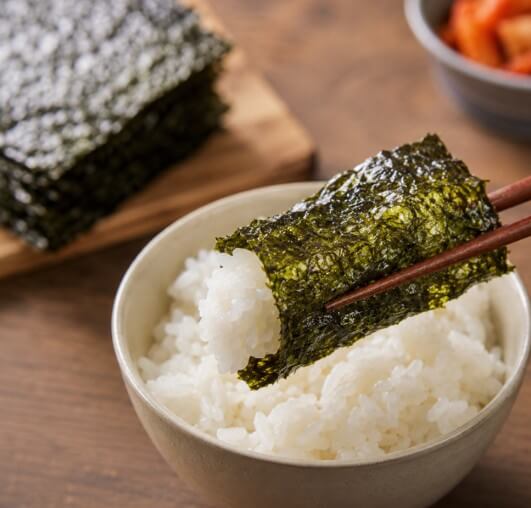
🍚 Wrap warm steamed rice
🍙 Make kimbap
🥢 Eat it as a side dish
🥣 Add it to ramen or soup
🥗 Sprinkle it over salads or rice bowls
🍘 Enjoy it as a crispy snack
In Korea, many people consider a bowl of freshly cooked rice and seasoned gim to be a simple yet satisfying meal.
💚 Is Korean Gim Healthy?
Yes!
Korean gim is widely recognized as a healthy superfood.
It is naturally rich in:
✅ Iodine
✅ Calcium
✅ Iron
✅ Magnesium
✅ Vitamin A
✅ Vitamin B Complex
✅ Dietary Fiber
✅ Protein
It is low in calories while providing essential vitamins and minerals.
🛒 Where Is the Best Place to Buy Korean Gim?
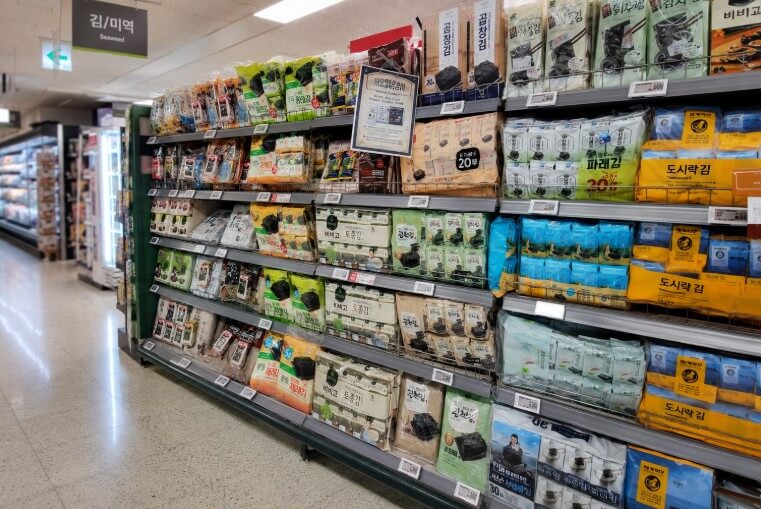
The best place to buy Korean gim at affordable prices is a large discount supermarket. Prices are generally lower than at convenience stores or souvenir shops, and you’ll find a much wider selection.
Recommended supermarkets:
🏪 Lotte Mart
🏪 E-Mart
🏪 Homeplus
🏪 NH Hanaro Mart
These supermarkets offer a wide variety of products, including lunchbox gim, table gim, traditional gim, dol gim, organic gim, premium gift sets, and more.
If you’re planning to buy several packs as souvenirs, purchasing them at a large discount supermarket is the most economical choice.
You can also buy Korean gim at:
🛍️ Convenience stores
🛍️ Traditional markets
🛍️ Department stores
🛍️ Airport duty-free shops
🛍️ Online shopping malls
🌊 Major Seaweed Production Regions in Korea
Most Korean gim is produced along Korea’s clean western and southern coastlines.
Major production regions include:
📍 Wando (Jeollanam-do)
📍 Jangheung (Jeollanam-do)
📍 Haenam (Jeollanam-do)
📍 Shinan (Jeollanam-do)
📍 Goheung (Jeollanam-do)
📍 Seocheon (Chungcheongnam-do)
📍 Boryeong (Chungcheongnam-do)
📍 Gunsan (Jeonbuk State)
These regions provide clean seawater, nutrient-rich coastal environments, and ideal tidal conditions, making them some of the world’s best locations for producing premium-quality seaweed.
📜 The History of Korean Gim
Koreans have enjoyed seaweed for more than 1,000 years.
Historical records show that edible seaweed was already being consumed during the Three Kingdoms Period. During the Joseon Dynasty, people began harvesting seaweed, drying it into thin sheets, and preserving it for everyday use.
Roasting gim with sesame oil and salt later became a uniquely Korean tradition, eventually making Korean seasoned seaweed famous around the world.
Today, Korean gim is one of Korea’s leading food exports and is enjoyed throughout the United States, Japan, Europe, Southeast Asia, and many other countries.
📦 How to Store Korean Gim
Because gim easily absorbs moisture, proper storage is important.
📌 Before Opening
- Keep it away from direct sunlight.
- Store it in a cool, dry place.
- Avoid hot and humid environments.
📌 After Opening
- Reseal the package tightly.
- Store it in an airtight container or zip-lock bag.
- Keep the moisture absorber (desiccant) inside the package.
- Consume it as soon as possible for the best flavor and crispiness.
If the gim becomes soft after absorbing moisture, briefly warming it in a dry frying pan or oven can help restore its crispy texture.
🎁 A Must-Buy Korean Souvenir
Korean gim is lightweight, affordable, easy to pack, and one of the most popular souvenirs among international travelers.
Whether you enjoy it with rice, eat it as a healthy snack, or share it with family and friends, Korean gim is a delicious way to experience authentic Korean cuisine and makes a wonderful gift to bring home.