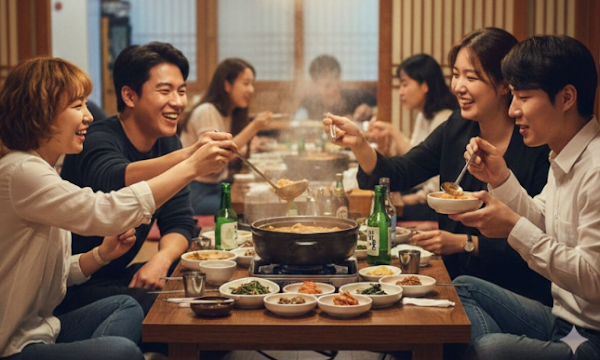
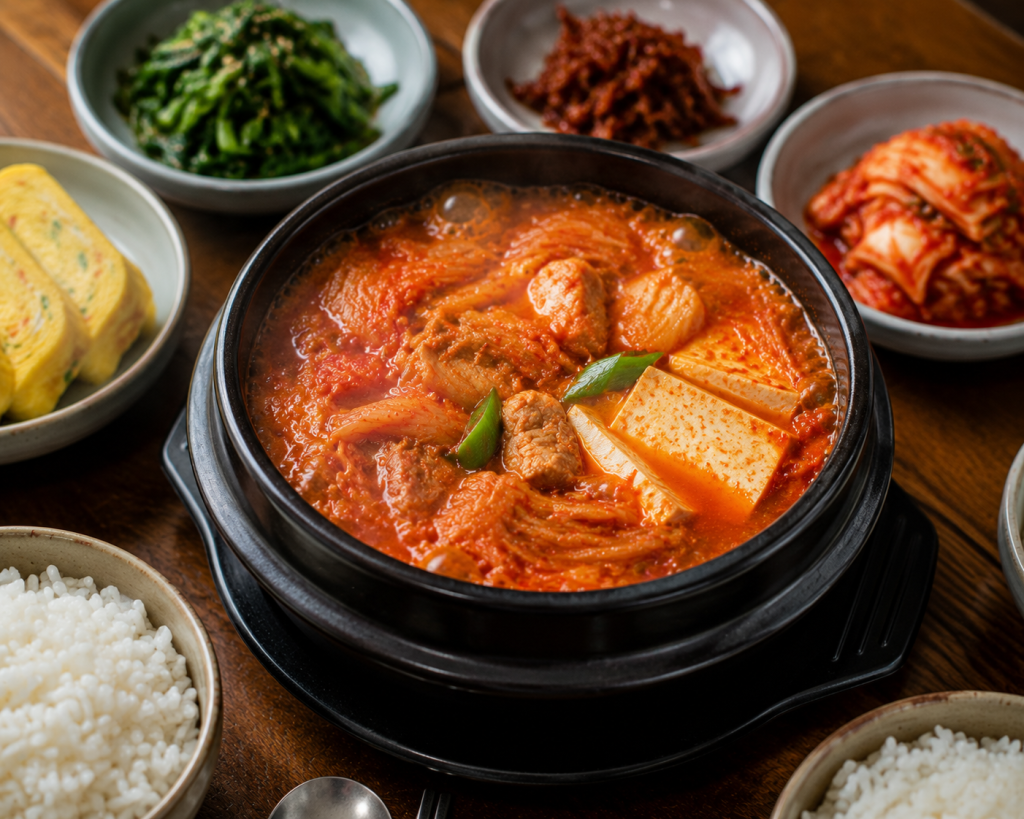
For many first-time visitors to Korea, one dining scene can feel surprisingly unfamiliar. At the center of the table, a bubbling pot of Jjigae (Korean stew) or Jeongol (hot pot) is placed, and everyone shares it together.
For travelers from Western cultures—where individual plating is considered basic table hygiene—this communal style can feel surprising at first.
“Is this hygienic?”
“Is this polite?”
To understand this tradition, it helps to look at Korean food culture more deeply.
🍲 The Heart of Korean Dining Culture: “We” and Jeong (정)
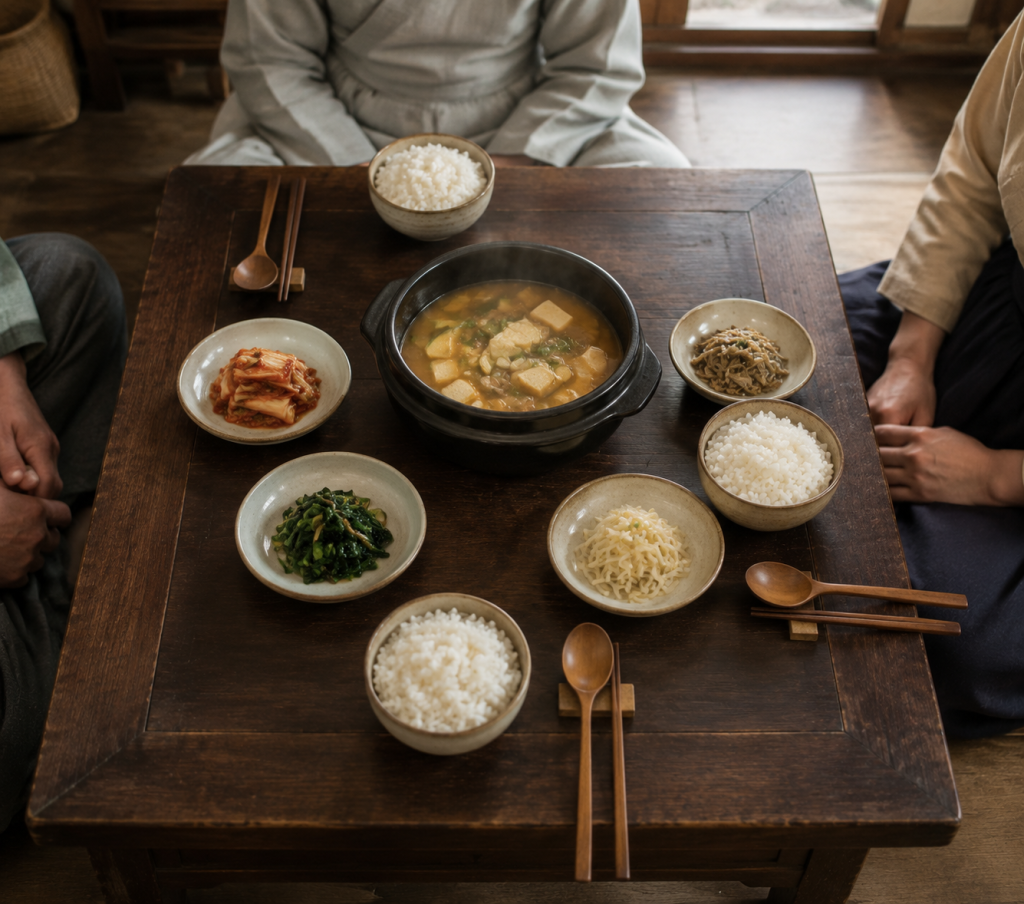
At the center of Korean society lies a special concept called Jeong (정). It means emotional warmth, affection, and deep human connection.
This feeling often appears at the dining table. The Korean word Sikgu (식구), meaning family, literally translates to: “people who eat together.”
Historically, Korea was an agricultural society. People worked together in rice fields and gathered around large pots to share meals during breaks.
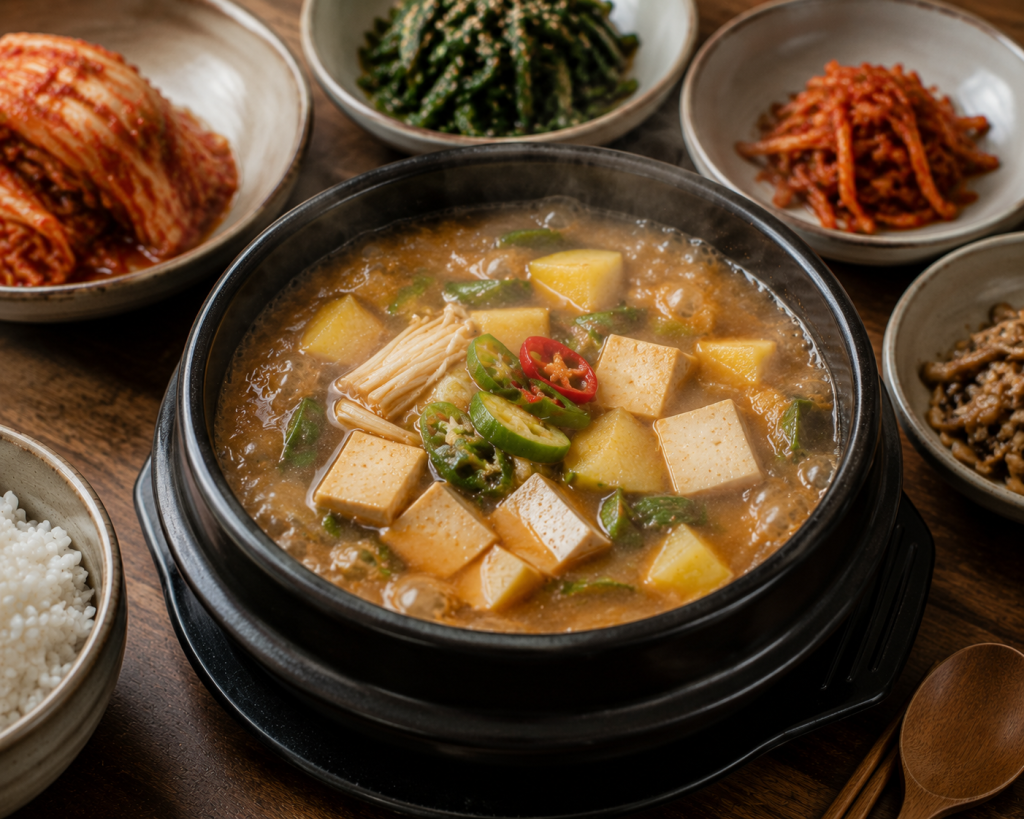
Because Korea has long, cold winters, hot soup dishes became essential. Families naturally sat around one large pot or Ttukbaegi (뚝배기) to keep food warm until the last spoonful.
Sharing Jjigae symbolizes:
- Closeness
- Trust
- Togetherness
🔄 Modern Changes: Smarter Dining Etiquette
While the emotional meaning remains, Korea has quickly adapted to modern hygiene standards. Today, it is much less common for people to use personal spoons directly in a shared pot.
As of 2026, most people use a shared ladle to serve stew into their own bowls. Even close friends and coworkers usually eat this way now.
Many restaurants also offer single-serving Ttukbaegi menus.
💡 Useful Korean Phrase for Foreign Visitors
If there is no serving ladle or side plate on the table, you can politely ask:
“국자랑 앞접시 주세요.”
(Guk-ja-rang ap-jeop-si joo-se-yo)
➡ Could I have a serving ladle and a small plate, please?
📌 Quick Tip to Remember
- Guk (국) = Usually served in an individual bowl
- Jjigae (찌개) = Usually shared in a communal pot
Understanding this small difference will help you enjoy Korean dining culture much more naturally.