How to Use the Korean Subway
For many travelers visiting Korea, the subway becomes one of the most memorable parts of the journey. It is one of the easiest and fastest ways to get around, and although it may seem complicated at first because of the many lines, it quickly becomes simple once you understand the basics.
One thing that surprises many foreigners is this:
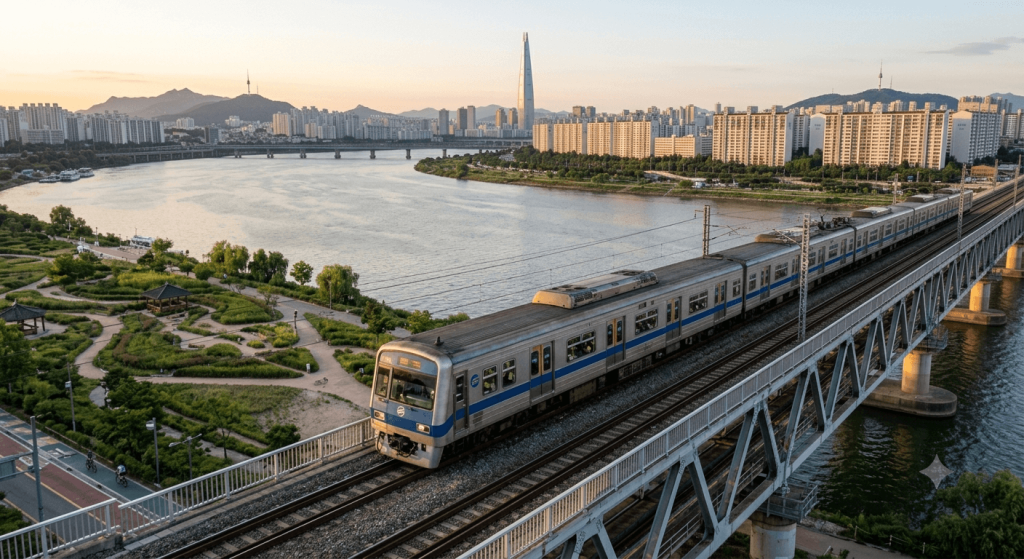
Korean subways do not only run underground.
In the city center, trains usually run beneath the streets, but as they move farther outside the city, they often come above ground and operate like regular trains. During the ride, you may suddenly find yourself looking out at the city skyline, mountains, or even the Han River. These moments often become part of the travel memories.
When you arrive at a subway station, the first thing to do is check the station name and line number. Each subway line has its own color, which makes it much easier for first-time visitors to understand.
Before taking the subway, you need either a ticket or a transportation card.
There are two main options:
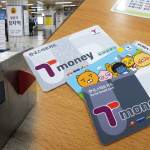
- T-money card (recommended)
- Single journey ticket
The T-money card is the most convenient option because it can be used not only for the subway, but also for buses and taxis. It is easy to buy at convenience stores and is highly recommended for travelers.
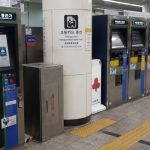
If you do not have a T-money card, you can buy a single-use ticket at the ticket vending machine inside the station.
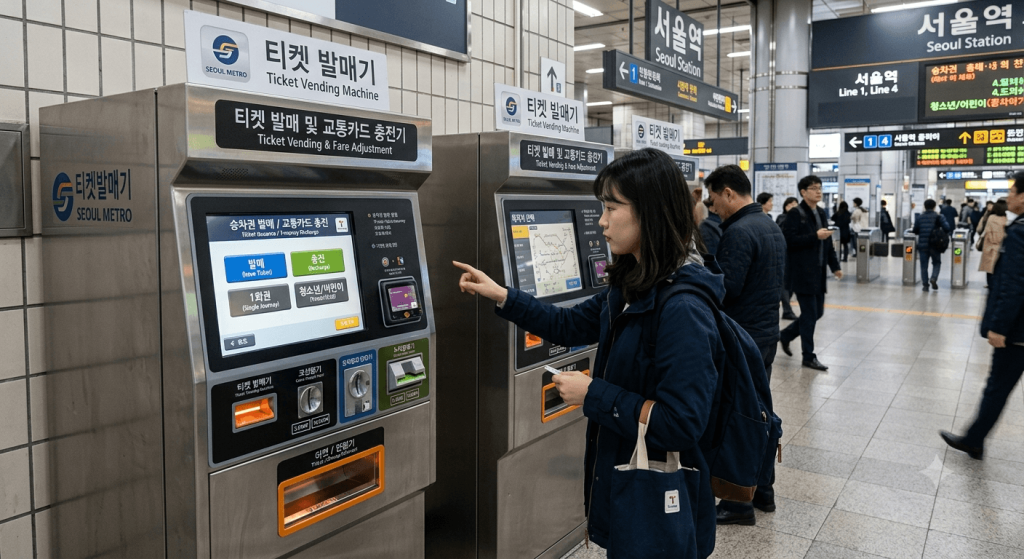
The basic subway fare in Seoul usually starts at around 1,500 KRW with a T-money card, while single-use tickets may cost a little more. The fare increases depending on the travel distance.
At the vending machine, you can pay by:
- Cash
- Credit card
- Transportation card recharge
T-money cards can also be recharged at convenience stores, subway machines, or kiosks, making them very easy to manage during your trip.
Once you have your ticket or transportation card, head to the gate.
Tap your card on the machine, and the gate will open.
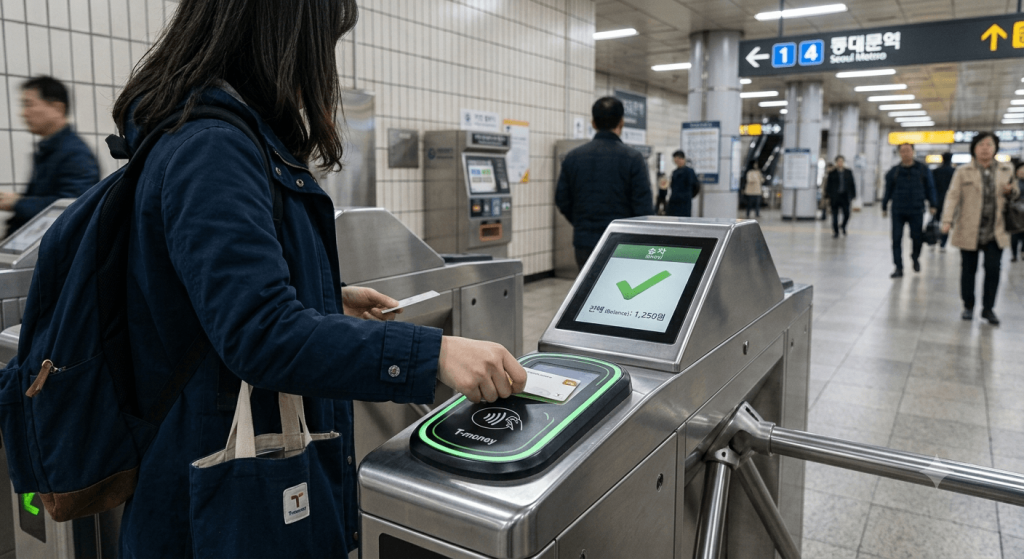
In Korea, you must tap once when entering and once again when exiting. This is how the system calculates your distance and fare.
When you reach the platform, you will notice lines marked on the floor showing where to stand.
Korean subway culture is known for being very organized.
The most basic rule is simple:
Let passengers get off first, then get on.
People wait in line and board in order. Cutting in line is considered rude.
Inside the train, you will usually notice a quiet atmosphere. Most people wear earphones, look at their phones, or simply rest. Speaking loudly or making long phone calls is generally avoided.
There is also a unique seating culture. Seats for elderly passengers, pregnant women, and people with disabilities are clearly marked, and even when empty, many people avoid sitting there unless necessary. This reflects Korea’s strong culture of consideration and respect.
Food should also be considered carefully. Drinking water or coffee is usually fine, but strong-smelling food is generally avoided on the subway.
One of the best parts of the Korean subway system is its transfer system.
If you need to change lines, simply follow the Transfer signs inside the station.
However, there are a few important things to remember when transferring:
- Do not exit through the gate during transfer
- Check the line number and color again
- Check the train direction (final destination station)
- Large transfer stations may require a long walk
- If traveling late, check the last train time
Subway directions in Korea are usually shown by the name of the final station rather than east or west, so it is important to make sure you are heading the right way.
While riding, you may notice the train moving from dark underground tunnels into bright outdoor railway sections. This sudden change often surprises visitors and becomes one of those small but unforgettable travel moments.
When your stop is approaching, it is a good idea to move near the door in advance. Korean passengers usually prepare early, which makes getting off smoother and faster.
Once you arrive, tap your card again at the exit gate.
If you used a single-use ticket, don’t forget to collect your deposit refund at the refund machine.
At first, the Korean subway system may seem complicated, but after using it a few times, it quickly becomes one of the easiest and most convenient transportation systems you will experience.
Fast, clean, safe, and highly organized, the Korean subway is more than just transportation—it often becomes a small but unforgettable memory of traveling in Korea.